Tuesday, 1 July 2014

Clean Eating - Another Diet Disaster?

 Quinoa? Acai? Chia? Flax?! 'Clean eating' is taking over every cook book shelf and celebrity instagram page. Here is Amy Buckle, currently a student studying photography, and her thoughts on the trending diets...


Is it me or is this just another label to add to the hundreds of others, the cabbage soup diet, the baby food diet, the juicing diet and the paleo diet, when does it end?

This new diet craze looks to be the latest inspiration for women to lose weight and feel healthier. A growing number of celebrities have begun to embrace 'clean eating' as part of their everyday lifestyle. Gwenyth Paltrow, Cameron Diaz and Nicole Kidman all promote the process of eliminating processed and refined foods, replacing them with nutritious whole foods instead.  We are being constantly bombarded with ludicrous diet fads, which may well bring us weight loss initially but in the long run cause us nothing but misery. Pass me a raw kale chip, doesn't have quite the same ring to it as a biscuit or piece of cake does it? 
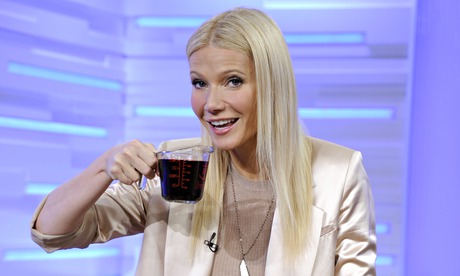
 

Our health obsessed industry has once again introduced us to an extreme overhaul whereby counting calories has become a thing of the past. It's many benefits include fat loss, weight loss, increased energy, clearer skin and shinier hair, along with better sleep and mental well-being. This is nothing we haven't heard of before and doesn't take a genius to work out that eating healthily ultimately leads to better health.

Eating fruits and vegetables along with whole grains and unprocessed foods will of course optimise nutrition, the industry doesn't need to spend nor generate even more millions to tell us that.
 
 
Personally clean eating will be different for everyone because when you think about it what is clean? To a vegetarian meat is deemed unacceptable, to a vegan it's animal products, to those following specific diets it'll be certain food groups. We can't win. Whatever happened to the concept of everything in moderation? 

We are being continuously brain washed with this notion that every food we eat is bad and the media is flooded with these contradictions over what is healthy and unhealthy. We are taught to believe and follow these trends that to me establish unhealthy relationships with food. 
 
 
Experts believe this to be a diet that does more harm than good, causing long term health consequences. Queensland University of Technology's professor of public health and nutrition, Amanda Lee says that, 'Young women, who make up the largest sect of the clean eating cult, are particularly vulnerable to low-iron status or anaemia, which can come back to bite them later on when they try to fall pregnant.' 
 
It's not easy being green and in my opinion it's about balance and moderation, making sure that every food group is implemented in order to achieve optimum health. 


Wednesday, 18 June 2014

In defence of introverts: ‘Quiet' by Susan Cain


She may be introvert, but you can't fault her words. Laura Maw shares with us her review of 'Quiet' by Susan Cain...


‘Why are you so quiet?’, ‘Do you never speak?’ and ‘You should just talk more!’ are three things the average introvert probably hears on a weekly basis. 
For all fourteen years of my education, being an introvert seemed to equivalent to being branded a freak. Among its other sparkly consequences, it involved not only being mocked by other students but awkward parents’ evenings, constant worried looks and regular doses of ‘jokey’ humiliation. 
I am very late to the party on this one. But I recently read Susan Cain’s ‘Quiet: the Power of Introverts in a World That Can’t Stop Talking’ and my first reaction (aside from a burning desire to post all of my teachers a copy) was one of huge relief. It acted as an essay of various arguments detailing why I was, contrary to popular opinion, not a freak for being quiet.
Cain’s book is thoroughly researched, compellingly written and so important. She charts the cultural ‘Extrovert Ideal’ and its impact on students in college, working environments and personal relationships with sensitivity and intelligence. 
‘Quiet’ is an outstanding achievement, not least because of its focus on how introverts can naturally unwind in a world that idealises extroversion. Cain’s coverage of ‘sweet spots’ or a ‘restorative niche’, are ideal levels of stimulation for the quieter among us. They might involve avoiding situations in which you feel overly-stimulated, but instead choosing to have a drink with close friends or read a novel at home. 
The importance of these ideal levels was painfully apparent during my Freshers’ week: it included copious amounts of busy parties, loud music and extrovert partygoers. When the term settled down, I felt infinitely happier meeting friends on campus for coffee or going to the pub in small groups. Freshers’ week is an extrovert’s heaven. Cain’s book is so important in reminding us that not all situations suit everyone – and to seek out the spaces you feel comfortable in is perfectly okay. 
One of the most interesting aspects of ‘Quiet’ was the section ‘How to cultivate quiet kids in a world that can’t hear them’, which gives advice to teachers. For most introverted children, home is always a sanctuary – and it is often school that twists introversion into a negative quality. At every parents’ evening, my mother would battle my corner against the teachers who seemed to grow increasingly angry at the gap between my reluctance to verbally contribute in class discussions and my eloquent (by comparison) essays. I had a difficult time explaining that I was more than happy to write essays and discuss in small groups or one-to-one, but the thought of class presentations terrified me. ‘Quiet’ provides advice that would have made my school life significantly easier: Cain urges teachers to balance teaching methods to serve all students, encourage introverts’ natural interests and avoid thinking of introversion as something that needs to be cured. 
Cain’s book is proof that the cultural and societal appreciation of introverts is long overdue. Crucial reading for every introvert, every extrovert, every parent and every teacher, ‘Quiet’ seeks to comfort and inform, paying attention to the people who are often overlooked. 

Tuesday, 10 June 2014

The Disturbing Truth

Meet another one of the contributors towards They Said What, QMUL student and aspiring Journo, Laura Maw.


I have heard many people defending UKIP since the start of the European elections. It’s seemed to get progressively worse after the announced results. And the amount of people who think that voting for UKIP or supporting them isn’t racist, sexist or homophobic is honestly incredible. 

I rarely write about politics, but UKIP’s win got my blood boiling.

The results of the election genuinely shocked me. I spent most of the evening in a state of rage and then desperately tried to keep hold of my faith in humanity. Did people honestly, seriously, actually vote for UKIP? 


Apparently yes. Someone recently said that their vote for UKIP was a protest vote. Erm, what? If you wanted your vote to be a protest vote against Labour, Liberal Democrats and the Conservatives. Why would you use this ‘protest vote’ to give more support to a racist, homophobic and sexist party? “But I’m not racist?!” I hear the UKIP supporter cry. Well, sorry to say this, but by voting for them you’re aligning yourself with their racist, homophobic and sexist views. So, yes, you are racist. You gave your vote to a party promoting racial hatred and discrimination. One that claimed gay people need to be shot, one that plans to scrap maternity leave and make it legal for a man to rape his wife. Nice one.
Another favourite argument of mine: “Don’t infringe on my freedom of speech! I can vote for whoever I want! You claim gay people have the right to have their freedom of speech for gay marriage and stuff! So why can’t I have my own freedom of speech! OMG don’t oppress me!” Ah, the ‘freedom of speech’ rhetoric, loved by Men’s Rights Activists and UKIP supporters everywhere. Well, pal, there is a huge difference between people defending their freedom to love whoever they want (using your example of same sex marriage) and using your ‘freedom of speech and free will’ to oppress minorities and increase hatred and discrimination - which is what UKIP promote, and what, in voting for them, you’re supporting. Big sarcastic thumbs up emoticon for you. 

A theory I recently heard for the surge in UKIP votes was related to the big EU question: the votes were simply to get Britain out of the European Union and once this was achieved, UKIP would lose supporters. This seems like a reasonable theory. In theory. However, can you really be that desperate to get out of the EU that you give your vote to a party like UKIP? A party which plans to make life significantly worse for groups of people? To me, the ‘getting out of the EU’ argument seems like code for: ‘I support UKIP’s other policies but am too afraid to say so’. The EU policy is a convenient curtain to hide racism, sexism and homophobia.

The defenses of UKIP are quite frankly, (excuse my French) bullshit. The claims that you’re ‘itching to get out of the EU’, you ‘hate the other parties’ and you need a ‘protest vote’ are handy get-out clauses to disguise the rise of fascism in Britain... and It’s bloody disturbing. 


Read more of what Laura has to say on www.laurajanemaw.wordpress.com

Thursday, 5 June 2014

Heaven, Hell and the Politician.

This week we were all about the previous European election, meet Rosie Hanratty and her opinion on what went down...

So UKIP won the European election? I hadn't noticed. Is it just me or is a growing number of the population choosing to feel less interested in politics, since (in my opinion) they all lie and tell you what you want to hear at the beginning of the election campaigns and then, you've guessed it, they spin on what they've originally said and show no intentions of following through their great big speech, about how they're going to change Britain for 'the great' again. Oh? The great? Well, that's been lost!

Have you ever heard the joke of the politician in Hell? This sums it up quite nicely...

While walking down the street one day, a Politician is tragically hit by a truck and dies. His soul arrives in heaven and is met by St. Peter at the entrance.
"Welcome to Heaven," says St. Peter. "Before you settle in, it seems there is a problem. We seldom see a high official around these parts, you see, so we're not sure what to do with you."
"No problem, just let me in." says the Politician.
"Well, I'd like to but I have orders from higher up. What we'll do is have you spend one day in Hell and one in Heaven. Then you can choose where to spend eternity."
"Really, I've made up my mind. I want to be in Heaven," says the Politician.
"I'm sorry but we have our rules." And with that, St. Peter escorts the Politician to the elevator and he goes down, down, down to Hell. The doors open and he finds himself in the middle of a green golf course. In the distance is a club and standing in front of it are all his friends and other politicians who had worked with him, everyone is very happy and in evening dress. They run to greet him, hug him, and reminisce about the good times they had while getting rich at expense of the people. They play a friendly game of golf and then dine on lobster and caviar. Also present is the Devil (a Politician, too), who really is a very friendly guy who has a good time dancing and telling jokes.
They are having such a good time that, before he realises it, it is time to go. Everyone gives him a big hug and waves while the elevator rises. The elevator goes up, up, up and the door reopens on Heaven where St. Peter is waiting for him.
"Now it's time to visit Heaven." So 24 hours pass with the Politician joining a group of contented souls moving from cloud to cloud, playing the harp and singing. They have a good time and, before he realises it, the 24 hours have gone by and St. Peter returns.
"Well then, you've spent a day in Hell and another in Heaven. Now choose your eternity."
He reflects for a minute, then the Politician answers: "Well, I would never have thought it, I mean Heaven has been delightful, but I think I would be better off in Hell."
So Saint Peter escorts him to the elevator and he goes down, down, down to Hell.
Now the doors of the elevator open and he is in the middle of an open bare land covered with waste and garbage. He sees all his friends, dressed in rags, picking up the trash and putting it in black bags. The Devil comes over to the Politician and lays an arm on his neck.
"I don't understand," stammers the Politician. Yesterday I was here and there was a golf course and club and we ate lobster and caviar and danced and had a great time. Now all there is a wasteland full of garbage and my friends look miserable.
The Devil looks at him, smiles and says, "Yesterday we were campaigning. Today you voted for us!"